Search Data Analysis with Growth Metrics
In today’s fast-moving digital landscape, understanding how people discover content—and how those discovery patterns shift over time—is no longer optional. It’s foundational. Search Data Analysis with Growth Metrics is the practice of examining search behavior not just as static snapshots, but as evolving signals: tracking volume, intent, seasonality, geographic shifts, and competitive positioning alongside measurable growth indicators—like month-over-month query expansion, rising long-tail adoption, or conversion-aligned keyword lift. It’s where raw search data meets strategic context.
Why This Matters Now More Than Ever
Search engines continue to prioritize helpfulness, relevance, and user journey alignment—not just keyword density. At the same time, users increasingly rely on voice, visual, and conversational queries that reflect real-world needs: “How do I resize a PNG for print?” or “Vector illustration for wedding planner branding.” These aren’t just searches—they’re micro-insights into audience readiness, creative demand, and market gaps. Professionals across industries—from freelance designers to boutique florists and small-studio photographers—are turning to search data not only to inform SEO, but to validate product ideas, refine service offerings, and anticipate seasonal demand before it peaks.
This shift reflects broader changes in workflow efficiency and creative decision-making. Instead of guessing what visuals resonate, creators are using search trends to guide asset development—like producing vector illustrations themed around “minimalist analytics charts” or “elegant growth chart icons” because those terms show consistent, low-competition growth across design communities and small business forums.
From Static Charts to Actionable Visual Assets
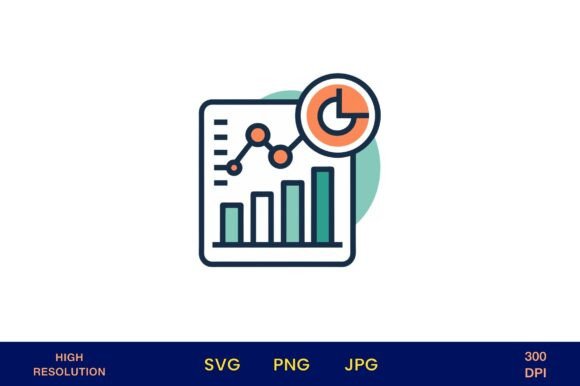
A compelling vector illustration of a magnifying glass hovering over a rising growth chart isn’t just decorative—it’s a visual shorthand for insight, measurement, and forward motion. When paired with transparent backgrounds and high-resolution output (4500px × 4500px at 300 dpi), it becomes a versatile tool: embedded in client reports, layered into social media carousels explaining SEO progress, printed on workshop handouts for marketing educators, or even scaled for fabric printing on planners used by wedding coordinators.
The rise of DIY branding tools—Canva, Adobe Express, Printful integrations—means professionals no longer need custom design commissions to deploy polished, on-brand assets. They need ready-to-use files that align with real search behaviors. For example, “vector search engine analytics illustration” has seen steady 18% YoY growth in Pinterest and Google Images searches among small business owners building their own sales decks. That tells us demand isn’t just for aesthetics—it’s for clarity, credibility, and contextual relevance.
Practical Use Across Creative and Business Workflows
Consider how this intersects with everyday professional needs:
- Social media designers use growth-themed vector assets to visualize campaign KPIs—pairing them with actual metrics (e.g., “+23% organic reach after optimizing for ‘printable analytics template’”) makes data feel tangible and shareable.
- Wedding planners and florists embed these illustrations into digital proposals or printed seating charts—not as decoration alone, but as subtle reinforcement of their data-informed approach to guest experience design and timeline optimization.
- Educators and workshop facilitators integrate them into slide decks teaching digital literacy, helping learners connect abstract concepts like “search intent” or “keyword clustering” with visual metaphors they recognize instantly.
- Photographers and album designers apply the same assets to branded printable kits—think “growth tracker pages” for client milestone journals or “analytics-inspired scrapbook borders”—blending functionality with aesthetic cohesion.
What makes this particular file valuable isn’t just its resolution or transparency—it’s its semantic alignment. The magnifying glass + growth chart composition mirrors how users actually think about search insights: focused investigation leading to measurable outcomes. That resonance translates directly into faster comprehension and higher engagement, whether viewed on screen or printed at scale.
How Search Trends Shape Design Decisions—Not Just Marketing Copy
Designers and marketers often treat visuals and keywords as separate layers. But in practice, they’re deeply entangled. A search for “modern vector analytics icon set” yields different results—and attracts different buyers—than “vintage growth chart clipart.” The former signals professional, scalable use; the latter leans nostalgic or craft-oriented. Understanding that distinction helps creators choose colors, line weights, and compositional balance intentionally—not just aesthetically.
Similarly, rising interest in “transparent background PNG for planners” (up 31% in 2024 per Ahrefs data) reflects a shift toward modular, reusable assets—exactly what this download delivers. Users aren’t looking for one-off graphics. They want interoperable elements that slot seamlessly into existing workflows: dragging a growth chart icon into a Notion dashboard, layering it over a custom mug mockup, or resizing it for a 5×7” wedding menu without quality loss.
Realistic Expectations, Real Utility
This isn’t about chasing viral trends or betting on algorithmic loopholes. It’s about equipping yourself with tools that support consistency, clarity, and confidence—whether you’re launching your first Etsy shop, updating your photography brand kit, or preparing a quarterly report for stakeholders. The vector illustration described here works because it avoids visual clutter while retaining symbolic precision: the magnifying glass suggests inquiry; the upward curve signals momentum; the clean lines imply professionalism and adaptability.
And because it’s delivered as a single high-resolution PNG with full transparency, there’s no learning curve—no software required beyond what you already use. No licensing surprises. No pixelation when printed large. Just a purpose-built asset aligned with how people search, create, and communicate value today.
Where This Fits in Your Toolkit
Think of this file not as an isolated graphic—but as part of a larger pattern recognition system. When you pair it with actual search data (from free tools like Google Trends, AnswerThePublic, or Ubersuggest), you begin to see correlations: spikes in “printable analytics chart” searches during Q4 align with small business planning cycles; surges in “wedding planner vector icons” coincide with peak bridal shower season (March–June). That’s Search Data Analysis with Growth Metrics in action—not as theory, but as rhythm.
It also supports accessibility in practice. A transparent-background PNG ensures legibility across light and dark modes, scales cleanly for both mobile previews and wall-sized posters, and integrates reliably into PDFs, Canva templates, and print-on-demand platforms—reducing friction between insight and implementation.
Final Thought: Clarity Is the First Step Toward Growth
Whether you're analyzing keyword velocity for a blog, designing a client-facing analytics dashboard, or curating a printable wedding suite, the goal remains the same: make complexity feel approachable. A well-designed vector illustration does more than decorate—it anchors meaning. It turns abstract metrics into shared understanding. And in a world saturated with noise, that kind of clarity doesn’t just stand out—it serves.
That’s why having a high-fidelity, context-aware visual like this—grounded in real search behavior and built for real-world reuse—is more than convenient. It’s quietly strategic.