Young Male in Sports Jersey Vector Art: A Practical Asset for Designers and Creators
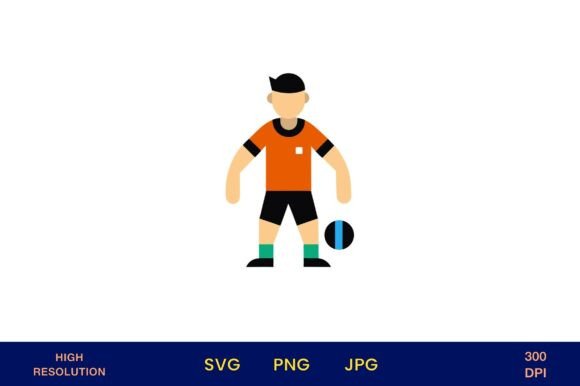
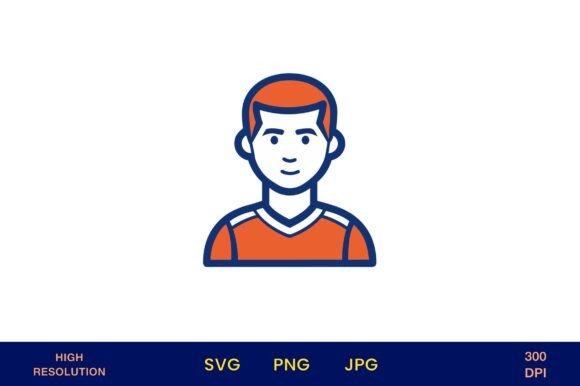
Young Male in Sports Jersey Vector Art is a high-resolution, scalable digital illustration of a confident young male athlete wearing a clean, modern sports jersey and styled with short hair. It’s delivered as a single 4500px × 4500px PNG file at 300 dpi—with full transparency—making it immediately usable across print and digital workflows without editing or conversion overhead. Unlike raster-heavy or low-res alternatives, this vector-derived asset retains crisp edges at any size, supporting both pixel-perfect web use and professional-grade print output.
Where This Asset Fits Into Real Creative Workflows
This isn’t just decorative clipart—it’s a functional design component that slots into specific stages of production. Before a project begins, designers use assets like Young Male in Sports Jersey Vector Art to build mood boards, define visual tone for client pitches, or populate early mockups. During execution, it becomes part of layered compositions—paired with typography, color palettes, or branded elements—to accelerate layout development. After finalization, it supports repurposing: the same file works on social banners, printable event signage, or merchandise mockups without re-exporting or quality loss.
For small business owners launching a youth sports camp, it can anchor an entire visual identity system—used consistently across Instagram posts, email headers, and printed welcome packets. For educators building physical education resources, it adds clarity and relatability to handouts or classroom posters. Photographers and florists incorporate it into wedding stationery suites (Save the Date cards, seating charts, table numbers) to subtly reinforce themes of energy, teamwork, or active celebration—without competing with photography or floral detail.
Compatibility and Integration Across Tools and Platforms
The transparent-background PNG format ensures seamless integration into widely used tools: Adobe Photoshop and Illustrator, Canva, Figma, Affinity Designer, and even Microsoft PowerPoint or Google Slides. Because it’s resolution-independent in practice (thanks to its large native size), you avoid pixelation when scaling for different outputs—no need to juggle multiple versions for web vs. print. When placed over gradients, photos, or textured backgrounds, the alpha channel preserves clean edges and eliminates manual masking.
It also pairs well with other digital assets. Combine it with editable text layers for custom invitations, layer it under SVG icons for branded planner stickers, or place it alongside photo overlays in scrapbooking kits. For branding projects, treat it as a secondary visual motif—complementing logos rather than replacing them—especially when targeting audiences interested in fitness, mentorship, school spirit, or community athletics.
Practical Implementation Tips for Consistent Results
- Start with purpose: Decide whether the illustration will serve as a focal point (e.g., center-aligned on a poster) or supporting element (e.g., corner accent on a greeting card). That guides sizing, contrast adjustments, and background choices.
- Preserve transparency intentionally: When importing into Canva or PowerPoint, verify the “transparent background” option is enabled. In Photoshop, ensure it’s pasted as a Smart Object or on its own layer—not flattened with a white background.
- Match color context: Use eyedropper tools to pull base colors from the jersey (often navy, black, or bold primary tones) and apply them to complementary text or borders. This creates cohesion without needing custom recoloring.
- Test print fidelity early: If using for physical products (mugs, pillows, t-shirts), open the file in your print provider’s template tool first—even at 300 dpi, some platforms auto-resize or compress uploads. Confirm dimensions remain at 4500px before final submission.
Use Cases That Extend Beyond Obvious Applications
While sports-themed marketing is the most direct fit, Young Male in Sports Jersey Vector Art functions effectively in less obvious contexts. Wedding planners use it in “team-oriented” bridal showers—framing the couple as co-captains of their new life. Educators embed it into classroom behavior charts (“Team Player Points”) to reinforce positive social-emotional learning goals. Freelance marketers include it in pitch decks for athletic apparel brands to demonstrate visual fluency without licensing risk.
Productivity-focused users integrate it into printable habit trackers or weekly planners—placing the figure beside sections labeled “Move Daily” or “Team Check-In”—adding subtle motivational reinforcement without clutter. Bloggers covering youth development or coaching strategies use it to break up long-form content, improving scannability while reinforcing topic relevance.
Long-Term Usability and Quality Control Considerations
Because this is a one-time digital download—not a subscription or library access—you retain full usage rights indefinitely. There’s no expiration, no recurring fee, and no attribution requirement. That makes it suitable for archival projects: if you’re designing a multi-year youth program toolkit or compiling a digital resource library for colleagues, this asset remains viable across versions and updates.
To maintain consistency over time, store the original file in a clearly labeled folder (e.g., “Vector Assets / People / Athletes”) alongside naming conventions that reflect use case (“young-male-athlete-jersey-social-banner”, “young-male-athlete-jersey-print-invite”). Avoid renaming or resaving as JPEG unless absolutely necessary—PNG preserves transparency and avoids compression artifacts.
Also consider how lighting and perspective interact with your layouts. The illustration uses front-facing, even lighting—ideal for flat designs and minimalistic templates—but may require subtle shadow layers or gradient overlays if placed in more dimensional mockups (e.g., mug wraps or pillow previews). These adjustments take seconds in most design tools and significantly improve realism.
Preparing for Smooth Integration Into Your Next Project
No special setup is required—but preparation improves speed and outcome quality. Before downloading, clarify your intended output: Will it be scaled down for Instagram Stories (1080px wide) or up for a 24×36″ poster? Knowing this helps determine whether you’ll need to crop, add bleed, or adjust spacing in advance. Also check your software’s default DPI settings—if working in Illustrator or InDesign, set document profiles to 300 dpi for print work to avoid last-minute resampling.
If collaborating with others, share the original file—not a resized version—so teammates can adapt it to their needs without generational quality loss. And if you’re building reusable templates (e.g., editable Canva invitation kits), insert the illustration as a locked, non-destructive layer so others can swap copy or colors without altering the core asset.
Finally, keep track of where and how you’ve used it. A quick log—date, platform, dimensions, modifications—helps avoid duplication in future campaigns and supports brand consistency audits. Over time, this simple habit turns a single digital purchase into a documented, repeatable part of your creative infrastructure.