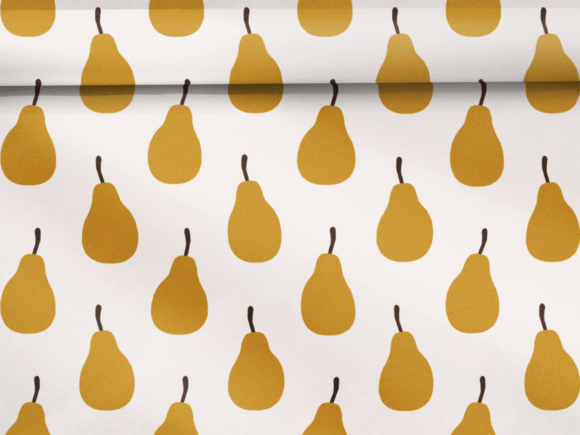
Seamless Pears on Light Pastel Paper
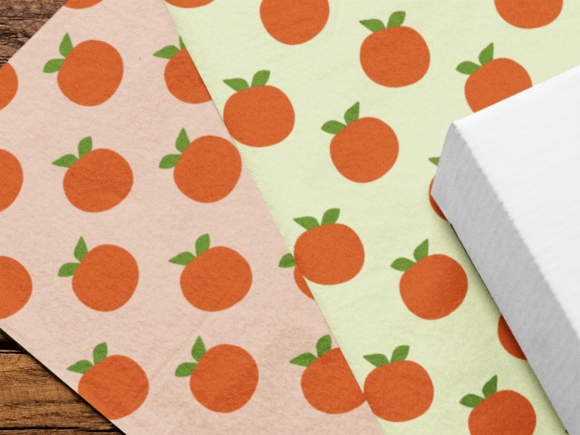
Imagine a sunlit orchard distilled into pattern: plump, cheerful pears in warm yellow tones—soft-edged, slightly rounded, gently shadowed—floating with quiet confidence across a whisper-soft pastel ground. That’s Seamless Pears on Light Pastel Paper: not a font, but a high-resolution, repeatable design asset built for versatility and visual calm. It’s a 3600 × 3600 px JPG at 300 dpi, delivered as six coordinated files in a single zip—each one tileable, each one purpose-built for real-world creative use.
A Pattern with Quiet Confidence
This isn’t loud or busy. There’s no forced symmetry, no rigid grid—just organic spacing, subtle variation in pear size and orientation, and a restrained color palette anchored in creamy off-whites, pale sky blues, and muted sage greens. The pears themselves carry gentle personality: friendly but not cutesy, fresh but not clinical. They’re drawn with soft vector-like clarity—clean enough for print, airy enough for digital backdrops. The overall effect is approachable sophistication: the kind that feels intentional without feeling effortful.
Because it’s seamless, the pattern flows effortlessly across surfaces—no awkward breaks, no visible edges. That makes it unusually adaptable. Whether you’re lining a gift box interior, setting a blog post background, or printing a limited-run tea towel run, the continuity holds. And because it’s delivered at print-ready resolution, scaling down for social thumbnails or up for wall murals doesn’t compromise fidelity.
Where This Design Asset Earns Its Keep
Seamless Pears on Light Pastel Paper shines where warmth, freshness, and understated charm matter most. In kitchen branding, it softens packaging for artisanal jams, honey, or small-batch baking mixes—adding tactile appeal without competing with product photography. For editorial design, it works beautifully as a section divider in recipe zines or food-focused newsletters, lending rhythm without visual noise.
Crafters and small business owners use it to elevate everyday items: think notebook covers with hand-stitched binding, reusable cotton totes for farmers’ market vendors, or custom wrapping paper for boutique apothecaries. It’s equally effective in digital spaces—as a subtle background layer behind hero text on landing pages, or as a consistent visual thread across Instagram Story highlights for wellness coaches or mindful lifestyle brands.
What sets it apart from generic fruit patterns is its tonal restraint. It avoids cliché (no cartoon stems, no exaggerated gloss), and its light pastel base ensures legibility—text overlays stay crisp, icons remain distinct, and photographic elements retain contrast. That balance is rare. Most “fresh” patterns tip too far into either whimsy or sterility; this one lands squarely in the middle.
Practical Integration, Not Just Aesthetics
Before dropping it into your next project, ask two questions: Does this support—not distract from—the message? and Does it align with the audience’s expectations of quality and care? For example, a luxury skincare brand might use it sparingly—as a border on ingredient cards or as a liner inside folded boxes—reinforcing natural origins without shouting about them. A children’s cooking blog, meanwhile, could scale it up for printable placemats, letting the pears become playful anchors for activity prompts.
Test readability early. Overlay body copy at 16–18 pt on a sample swatch. If contrast dips below 4.5:1 against your chosen text color, adjust the background opacity (10–15% works well) or shift to a darker pear variant if available. For web use, export a compressed PNG version with transparency if you need layered effects—but keep the original JPG for print backups.
Font pairing? Think complementary tone, not literal match. Since this is a pattern—not typography—it pairs naturally with clean, humanist sans serifs (like Inter or Lato) for modern clarity, or with low-contrast serifs (such as Freight Text or Chronicle) for editorial warmth. Avoid heavy display fonts or tight script faces—they’ll visually clash with the pattern’s open, breathable rhythm.
Licensing, Longevity, and Real-World Use
The included commercial license covers both personal and small-business applications: physical products (towels, stationery, apparel), digital assets (websites, social graphics, email headers), and printed collateral (menus, flyers, packaging). It does not extend to resale of the pattern file itself or use in templates offered for mass redistribution (e.g., Canva marketplace uploads).
That said, its value multiplies when treated as part of a broader brand identity system. Pair it with a consistent color palette (pull three hues directly from the pears and background), a primary typeface with clear hierarchy, and one signature illustration style—and suddenly you’ve got cohesion across touchpoints, not just decoration. One bakery client used it across their aprons, receipt tape, and seasonal menu boards. Customers didn’t name the pattern—they named the *feeling*: “calm,” “trusted,” “thoughtfully made.” That’s the quiet power of well-chosen design assets.
If you're evaluating whether Seamless Pears on Light Pastel Paper fits your current project, try this: sketch your intended application on paper first. Block out where the pattern will sit, where text lives, where photography appears. Does the pear motif enhance that composition—or compete? Does it feel like an extension of your voice, or a borrowed accent? Trust that instinct. Good design assets don’t shout for attention—they settle in, support the work, and disappear just enough to let the content breathe.
It’s not flashy. It won’t go viral. But in the right context—with thoughtful placement, respectful scaling, and alignment to audience values—it becomes quietly indispensable. Like a well-worn apron, or a favorite ceramic mug: unassuming at first glance, deeply resonant with repeated use.